
Turning Pages, Growing Language: All About Shared Book Reading
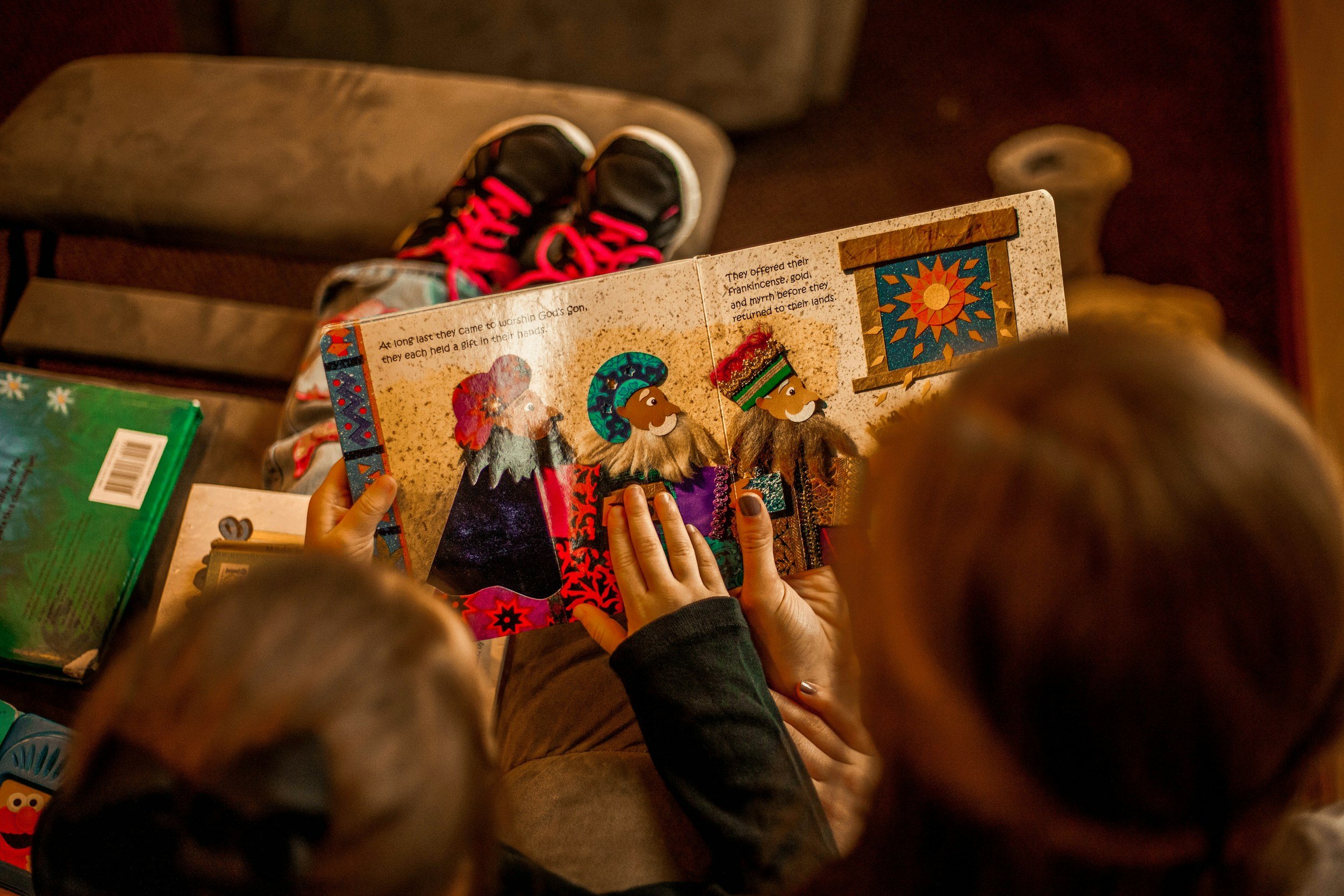
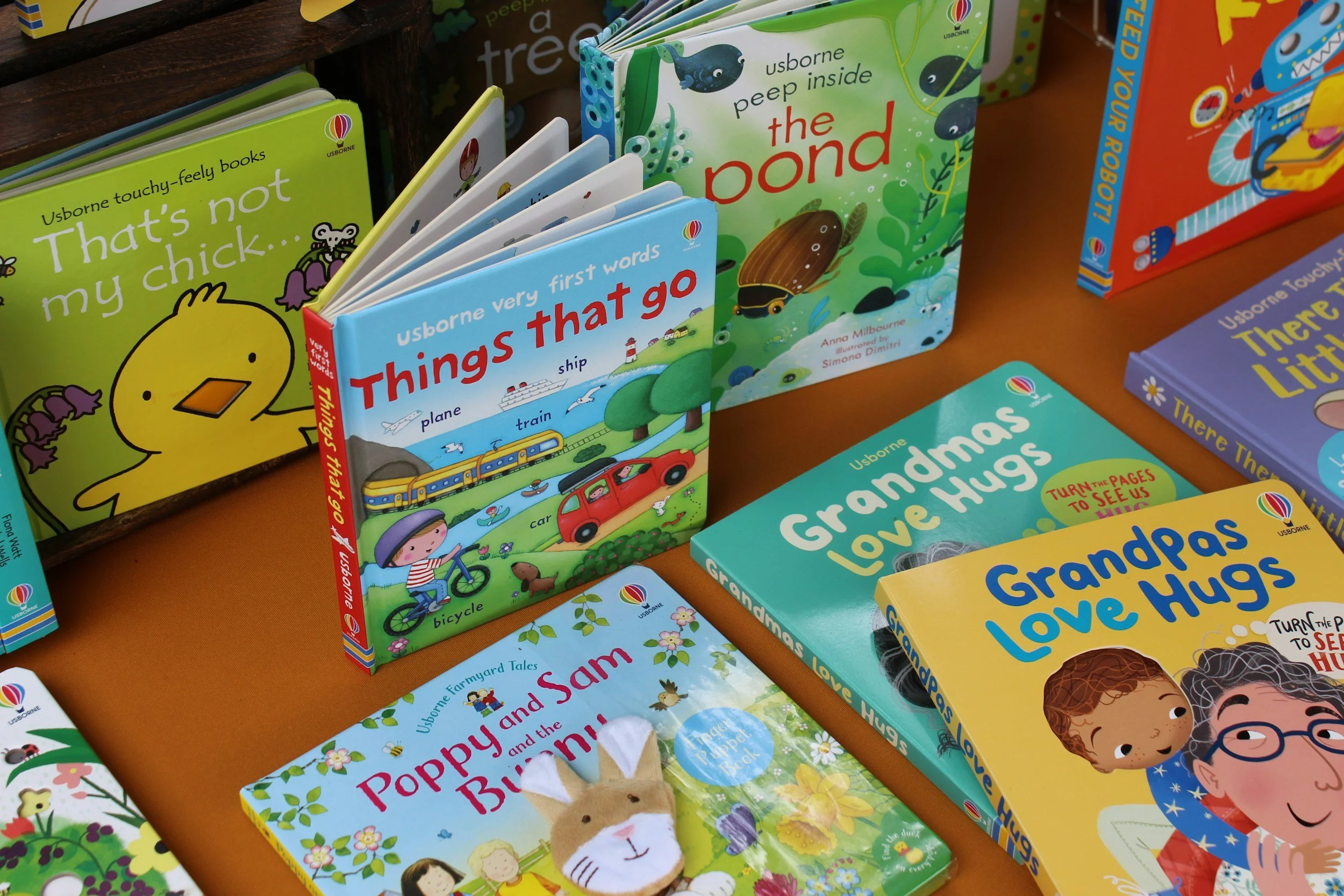
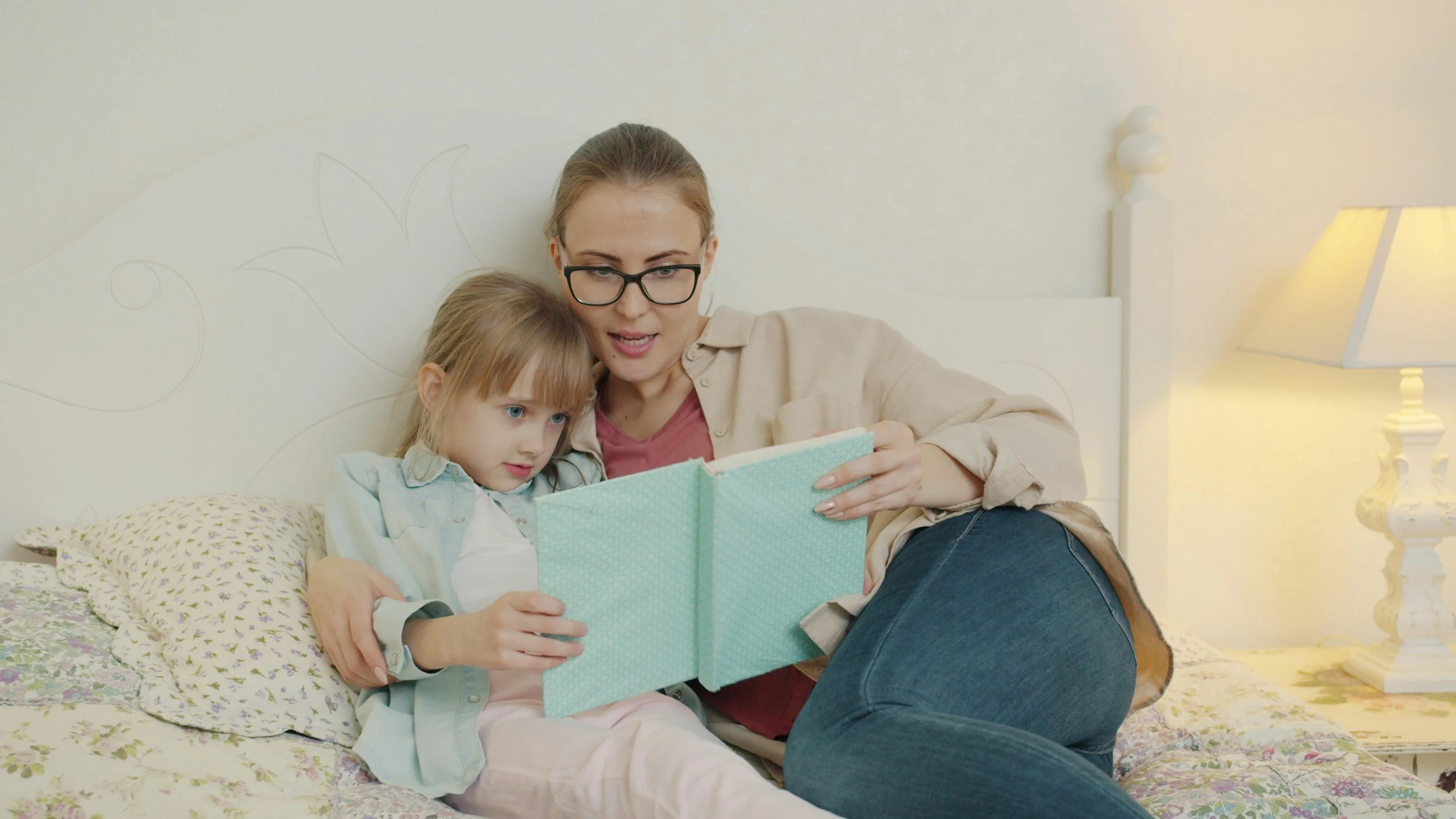
Shared book reading is a wonderful opportunity to build language, encourage communication, and spark curiosity through the simple act of reading together.
What is Shared Book Reading?
Shared book reading is more than just reading a book out loud to your child; it’s an immersive language-building experience. Instead of simply reading words aloud, the goal is to engage the child in the content by asking questions, describing pictures, explaining vocabulary, connecting the text to experience, and applying other strategies. The goal is to use the story as an opportunity to build language!
Does it Work?
Curious what the research says? Below are some evidence-based studies highlighting the benefits of shared book reading.
Research shows that shared book reading can help children build:
VOCABULARY: Learning new words and understanding what they mean. (Elley, 1989; Farrant & Zubrick, 2011)
CONVERSATION SKILLS: Practice taking turns, participating in conversations, and sharing ideas. (Morrow, 1988; Reese, 1995)
STORYTELLING SKILLS: Learn to describe events and retell stories. (Morrow, 1988; Reese, 1995)
PRINT AWARENESS: Learn how books work and understand that printed words carry meaning. (Justice & Ezell, 2000, 2004)
SOUND AWARENESS: Recognize and play with the sounds in words, an important early literacy skill. (Chow et al., 2008; Lefebvre et al., 2011)
FUTURE READING SKILLS: Build early literacy skills that support later reading development. (Bus et al., 1995)
Additional citation: Noble, Claire, et al. "The Impact of Interactive Shared Book Reading on Children’s Language Skills: A Randomized Controlled Trial." Journal of Speech, Language, and Hearing Research, 2020, https://doi.org/10.1044/2020_JSLHR-19-00288.
What are the Strategies?
You don't have to be a teacher or speech-language pathologist to help your child learn while reading! Small changes in how you read together can create wonderful opportunities for communication.
The ABC’s of Shared Book Reading
Ask questions about the book.
Build vocabulary by pointing to pictures and name what you see (repeat these words throughout the story, and find ways to embed them in your day-to-day routines).
Connect the context to the child’s world (such as “we have a dog too!”)
Expand on What Your Child Says: When your child says something, add a little more information to help them learn new words and sentence structures.
“Cat!”
“Yes! A tiny, black cat!”
Follow Your Child's Interests: Let the child have a say in what book is being read, the rate it’s being read, etc.
Read Favorite Books Again: Repetition helps children become familiar with words, phrases, and stories.
Strategies for Engaging Children with Autism in Shared Book Reading
As stated in Fleury (2013), “Because shared reading places social and language demands on children, as many as 40% of children with disabilities do not show an early or continued interest in book reading and actively resist storybook reading interactions (Kaderavek & Sulzby, 1998).”
Proposed strategies include…
Routine, Routine, Routine:
Make book reading a part of your child’s daily routine. By applying routines, checklists, and visual schedules, unexpected changes won’t create stress prior to reading.
Create a Dedicated Reading Environment:
Create a specific, comfortable reading space.
Reduce noise and visual distractions.
Offer different seating options, such as a beanbag, cube chair, or therapy ball, to help children focus.
Improving Compliance & Leveraging Interests:
Let children choose where to sit or pick a book from a few options.
Choose books about their favorite characters, animals, or activities to keep them interested.
Read familiar books again or look at the pictures before reading to help children know what to expect and stay engaged.
Teaching & Reinforcing Appropriate Reading Behaviors:
Use simple pictures to show your child what reading time looks like, such as sitting safely and looking at the book.
Praise your child when they participate or follow the reading routine. You can also use a reward system, such as earning stickers or extra playtime, to encourage participation.
Fostering Active Participation:
Start with short reading sessions that match your child’s attention span. Gradually increase reading time as your child becomes more comfortable.
Praise and encourage your child along the way!
How is This Used in Speech Therapy?
Speech-language pathologists (SLPs) can use books to target a variety of communication goals, including learning new vocabulary, building longer sentences, answering WH-questions, retelling stories, and developing social communication skills. For children who use augmentative and alternative communication (AAC), books also provide opportunities to model vocabulary on communication devices and encourage communication beyond requesting. By asking questions, expanding on a child's responses, and connecting the story to their everyday experiences, SLPs can turn reading into an engaging, goal-directed activity.
Every child develops communication skills at their own pace, but if you have concerns about your child's speech or language development, support is available.
At Hart Therapy Services, we help families in the Atlanta area better understand their child’s communication needs and explore ways to support their growth. If you have questions about your child’s speech and language development or are interested in our services, schedule a consultation call with us! We’d love to connect with you and discuss how we can support your family.
Conclusion
Shared book reading is about so much more than reading the words on a page. It creates opportunities for children to learn new words, practice communication, develop early literacy skills, and connect with the people around them. Remember, you don't need to be a perfect reader or use every strategy perfectly at once. Ask questions, talk about pictures, follow your child's interests, and give them time to communicate in their own way.
So grab a book, turn a page, and let the learning begin!